
Melanocortin Research Peptides
Melanocortin research peptides are studied for their binding at the MC1R through MC5R receptor family and the downstream cAMP signaling those receptors control. The two compounds in this category are supplied strictly as laboratory reference materials and are not for human or veterinary use.
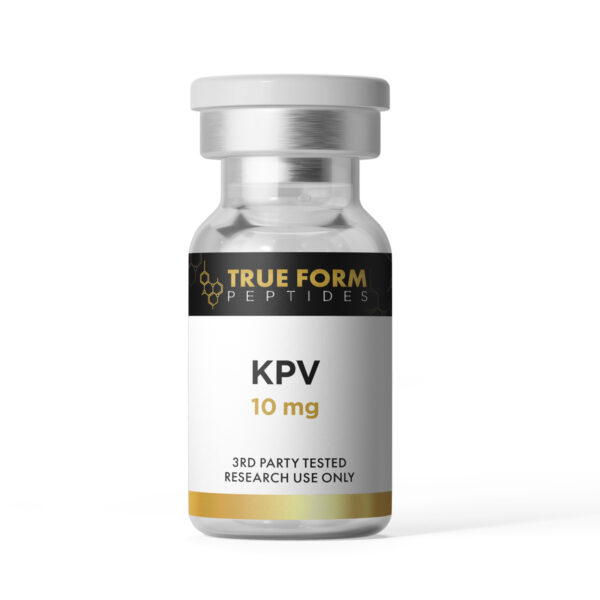
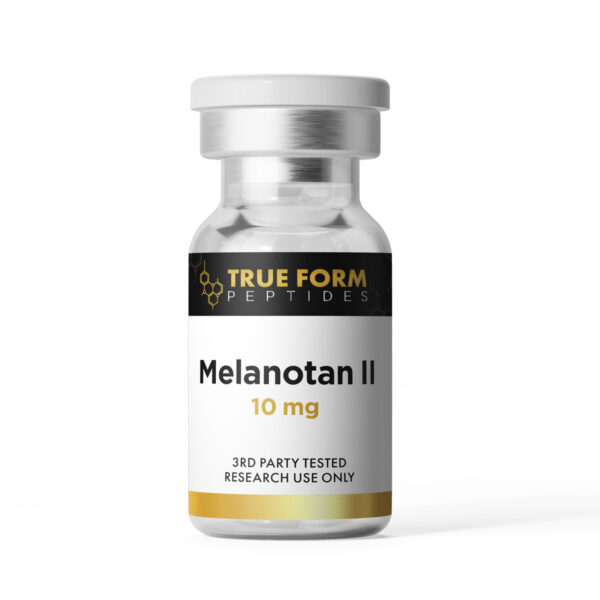
Melanotan II 10mg is a cyclic lactam analogue of alpha-melanocyte-stimulating hormone that is non-selective across the melanocortin receptor subtypes, which is precisely why it appears so often in receptor-characterisation and competitive-binding assays. KPV 10mg is the C-terminal tripeptide of the same parent hormone and is investigated for its role in NF-κB-linked signaling in cultured cells, largely independent of pigment-related receptor activity. Together the two sequences give investigators a broad agonist and a short fragment to compare within a single experimental design.
What researchers study in this category
Published melanocortin work examines receptor subtype selectivity, cyclic AMP accumulation in transfected cell lines, structure-activity relationships across analogues of the parent hormone, and the enzymatic stability of cyclic versus linear sequences. Findings in this field are reported from in-vitro systems and animal models, and this site does not extend them to any other context.
Both products ship from the United States and are produced to a minimum 99% HPLC purity specification. Batch certificates of analysis (COAs) covering HPLC purity and mass-spectrometry identity are published on many individual product listings, so a laboratory can verify sequence identity before running a binding study. Material is shipped lyophilized for cold storage and reconstituted at the bench with a suitable laboratory diluent.
These peptides are research chemicals, not drugs, cosmetics or supplements. No product in this category has been approved by any regulatory authority for any purpose involving people, and nothing on this page should be read as describing a use, an application or an outcome. Sales are limited to qualified researchers and laboratory institutions.
Showing all 2 results
Ask about product or Report an issue
Frequently asked questions
What is the melanocortin pathway and which peptides act on it?
The melanocortin system is a family of five G protein-coupled receptors that respond to peptides derived from proopiomelanocortin, and the literature investigates it in relation to pigmentation, inflammatory signaling and central regulation. Melanotan II is a synthetic cyclic analog studied across several of those receptor subtypes, while KPV is a tripeptide fragment of alpha-MSH examined mainly in inflammatory signaling. Both are research chemicals only.
What is the difference between KPV and Melanotan II?
KPV is a three-residue fragment of alpha-melanocyte stimulating hormone, investigated in the literature largely for its role in inflammatory signaling. Melanotan II is a larger cyclic synthetic analog of the same parent hormone, studied for binding across multiple melanocortin receptor subtypes in preclinical models. They therefore differ in molecular size, receptor profile and the research questions each is typically used to explore in the laboratory.
Why is KPV listed in more than one category?
KPV appears under both melanocortin and immunomodulatory because it originates as a fragment of a melanocortin hormone while the literature investigates it largely within inflammatory signaling. Category placement on this site reflects the pathway a compound is studied in, and some sequences legitimately belong in two. The product is identical in either listing: a 10mg lyophilized vial supplied for laboratory research use only.
Is Melanotan II sold to a stated purity specification?
Yes. Melanotan II, like every peptide listed on the site, is supplied to a minimum 99% HPLC purity specification, and batch certificates of analysis are published on many individual product pages. The COA identifies the lot, the analysis date and the purity figure determined by chromatography. Material in this category is sold for laboratory research use only and is not for human or veterinary use.