


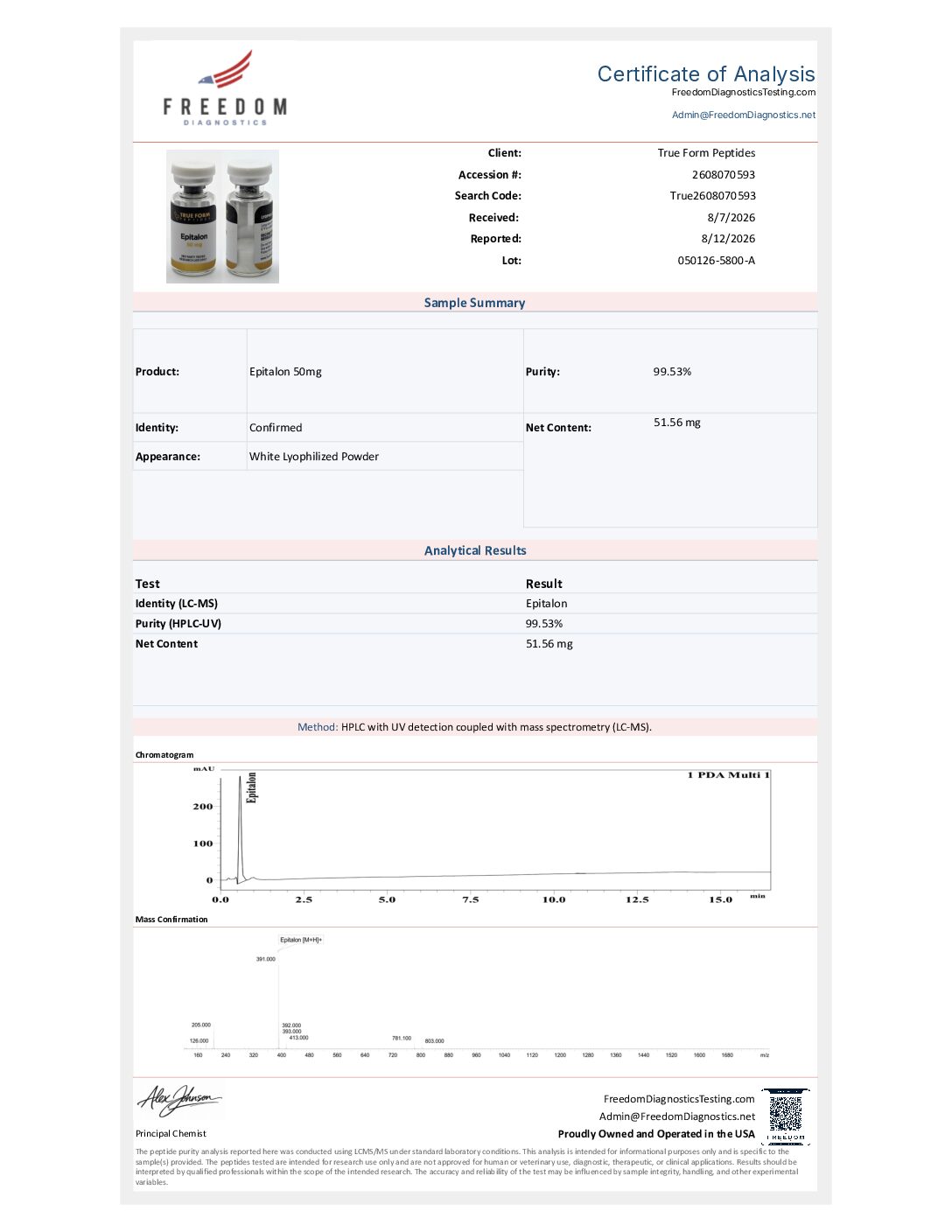


Epitalon – Telomerase Signaling Research Peptide
Compound Name: Epitalon (Epithalon)
Classification: Research Peptide – Synthetic Tetrapeptide
Description:
Epitalon is a synthetic tetrapeptide composed of alanine, glutamic acid, aspartic acid, and glycine and is structurally derived from naturally occurring pineal peptide compounds. In controlled laboratory research environments, Epitalon is widely studied for its role in peptide-mediated signaling, cellular regulatory pathways, and telomerase-associated biological processes.
Researchers commonly utilize Epitalon in biochemical and in-vitro model systems to investigate cellular signaling mechanisms related to chromatin regulation, oxidative stress response, circadian-associated pathways, and cellular homeostasis. Due to its defined peptide structure and relevance in peptide signaling research, Epitalon serves as a valuable research tool in studies focused on cellular regulation and peptide-mediated biological signaling pathways.
This compound is supplied in lyophilized (freeze-dried) powder form to enhance stability for controlled laboratory research applications.
Selected Research References:
- Khavinson V et al., Molecules (2020)
– Investigation of AEDG peptide (Epitalon) and gene expression during neurogenesis-related signaling pathways. - Khavinson VKh et al., Bulletin of Experimental Biology and Medicine (2004)
– Study of Epitalon-associated signaling and cellular division pathway regulation. - Khavinson VKh et al., Neuro Endocrinology Letters (2003)
– Investigation of Epitalon and chromatin activation in aging cellular models. - Khavinson V et al., Neuro Endocrinology Letters (2002)
– Research involving pineal peptide signaling and retinal cellular regulation models.
Disclaimer:
This product is intended for laboratory research use only (RUO).
Not for human consumption. Not for therapeutic, diagnostic, agricultural, or veterinary use.